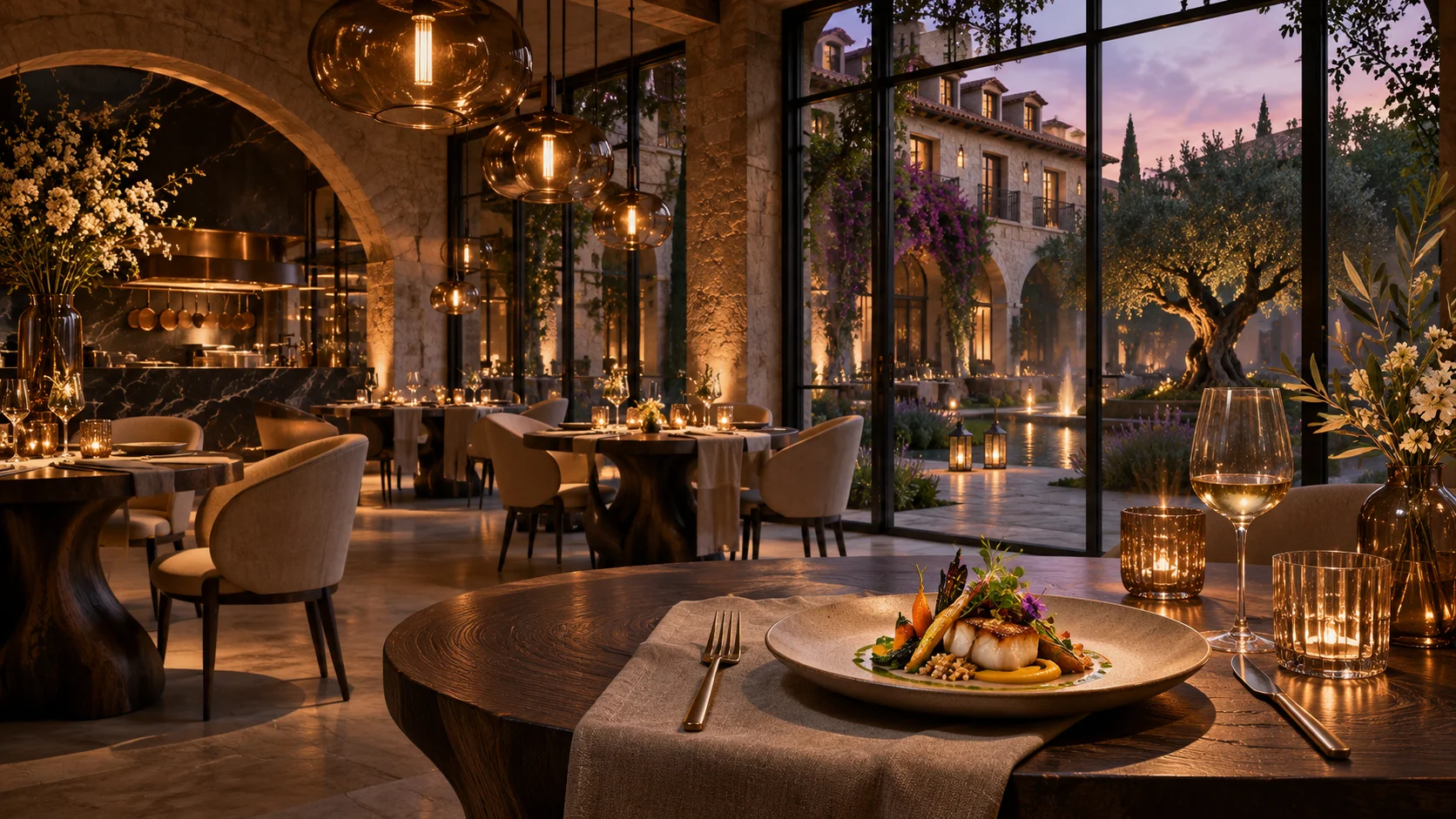
A memorable restaurant can connect a hotel to its neighbourhood. Align the menu, service and commercial model around a reason to return.
Give the restaurant its own point of view
Define who the restaurant serves and why a local resident would visit without booking a room. The concept may centre on regional ingredients, a distinctive breakfast or an intimate evening service. Keep the promise narrow enough for the kitchen and floor team to execute consistently.
Design the menu around capacity
Assess ingredient availability, preparation time, waste and equipment constraints. Include dishes that share components without making the menu repetitive. Review contribution after ingredient cost alongside preparation effort and guest demand; selling more of a difficult dish can create pressure elsewhere.
Make dietary communication dependable
Provide a clear route for guests to discuss ingredients and preparation with trained staff. Record requests accurately and confirm them with the kitchen. Do not promise an allergen-free environment unless the operation can substantiate it. Follow the applicable local food-safety requirements.
Connect residents and hotel guests
Make reservations easy to find from the hotel website and from the restaurant’s own listings. Offer the same transparent menu information to locals and visitors. Coordinate room-service demand, breakfast peaks and special events so one service does not unexpectedly undermine another.
Use a weekly review
Look at covers, average spend, ingredient cost, waste, labour scheduling and guest feedback together. Select one adjustment, such as reducing a slow-moving item or changing a reservation interval, and observe its effect. The goal is a restaurant guests seek out and a team that can deliver it reliably.
Thoughtful hospitality begins with a better question. Take one idea from this story and put it into practice with your team.
Explore more perspectives ↗